
How to Prepare Your Band for a Studio Recording
Studio time is the most expensive part of a recording, and the best sessions are won before you even load the car. Bands that turn up prepared spend their days capturing great takes; bands that don't spend them fixing guitars, arguing about arrangements and running out of time.
1. Finish the songs
The studio is the wrong place to write. Decide the structure, the parts and the arrangements before the session – who plays what, where, and how the song ends. Small ideas will still come up in the studio, and that's part of the fun, but the foundation should be solid. If the band still argues about the bridge, settle it in the rehearsal room, not with the clock running.
2. Rehearse to a click
Most modern recordings are tracked to a click, especially when the instruments are recorded one at a time. If your drummer has never played to one, start weeks before the session, not the night before. Agree on the tempo of every song – and any tempo changes – and write them down. If you don't want a click, that's fine too, but decide it in advance and rehearse the songs exactly the way you'll record them.
3. Make a pre-production demo
Record a rehearsal – a phone in the middle of the room is enough – and listen back together. You'll hear things you don't notice while playing: parts that clash, sections that drag, a tempo that's too fast. Send the demo to your engineer before the session, together with the tempos and two or three reference records with the sound you're after.
4. Decide how you'll record
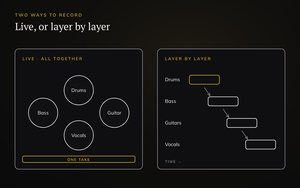
There are two main ways to track a band:
- Live, all together. The whole band plays in the same room, maybe with the vocals added afterwards. It captures the energy and the interplay, and suits bands that are tight live. Mistakes are harder to fix, because every microphone hears every instrument.
- Layer by layer. Drums first – often with the bass or a guide guitar playing along – then bass, guitars, vocals and the rest as overdubs. It gives more control and cleaner tracks, but takes longer and needs a solid click and good preparation.
Many sessions mix the two: drums and bass together, guitars and vocals afterwards. At Black Sun Audio, the large live room and the separate vocal booth allow both. Talk it through with your engineer when you plan the session.
5. Get your gear in shape
- Drums: new heads a few days before the session so they have time to settle, the kit tuned, no squeaking pedals or rattling hardware, spare sticks
- Guitars and bass: new strings a day before, intonation and setup checked, fresh batteries in active pickups and pedals
- Amps and pedals: no crackling pots or noisy cables – and spare cables and fuses
- Spares: strings, picks, drum keys, batteries and anything else that can break
Recording DI guitars or bass yourself? Read how to record DI guitars properly at home and how to achieve a great bass DI sound.
6. Plan the days
Agree on a running order: which songs first, who plays when, and what must be finished by the end of each day. Start with the song the band knows best to warm up. Be realistic – most bands record fewer songs per day than they expect – and keep a buffer for the things that always take longer.
7. Singers: look after your voice
Learn the lyrics by heart and bring a printed copy with your notes. Warm up before your takes, drink water, sleep properly the nights before, and avoid screaming through a loud rehearsal the day before the session. Even extreme vocals need a rested voice to sound their best.
Wondering which mic to use? Read what's the best microphone for death and black metal vocals.
8. On the day
- Arrive on time and rested – long sessions need energy
- Bring food and drinks – there's a big kitchen at the studio
- Bring only the people who need to be there
- Put your phones on silent and give the person recording your full attention
- Listen back as you go – it's easier to fix a part today than after the mix
Quick checklist
- Songs finished, arrangements decided
- Tempos written down, rehearsed to a click
- Pre-production demo and references sent to the engineer
- Recording method agreed: live, layered or both
- New drum heads and strings, gear checked, spares packed
- Running order planned, with a buffer
- Lyrics learnt, voice rested
Ready to book? See recording at Black Sun Audio and the prices – a full studio day is 2800 DKK / €375. Or get in touch to plan your session.
Further reading
- Mike Senior, Recording Secrets for the Small Studio (Focal Press)
- Bobby Owsinski, The Recording Engineer's Handbook